Which businesses can and cannot advertise on ChatGPT? Check if yours is in a banned category

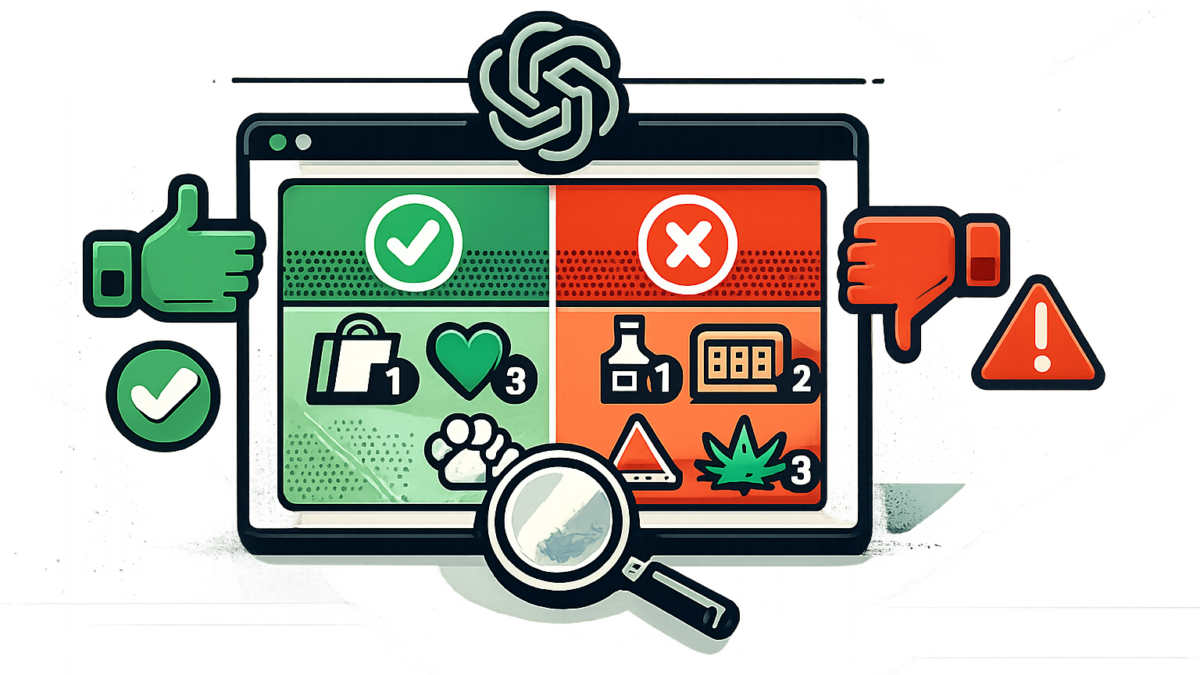
ChatGPT ads are open to most consumer businesses, but financial services, healthcare and legal services are largely restricted, and outside the US they are almost entirely closed. OpenAI’s Ads Policy Eligibility table, checked on November 18, 2026, sorts 34 health and financial categories into two columns, “US” and “All Other Countries.” In the US, 10 are open to any advertiser and 12 to approved advertisers only. Outside the US, just two are open to any advertiser, health software and financial software, by our count.
Alcohol, gambling, dating, political ads, recreational drugs and job or housing listings are not allowed in any country, according to OpenAI’s Ad Policies, last updated September 10. Ads are shown only to logged-in adult users on ChatGPT’s Free and Go plans.
Which businesses can advertise on ChatGPT?
Consumer businesses can advertise freely in all supported markets. OpenAI’s policy says ads are “primarily limited to consumer verticals such as lifestyle and household goods, local services, travel and experiences, and digital products or education.”
Self-serve buying through Ads Manager was available in 89 countries and territories when checked on November 18, according to OpenAI’s availability page. OpenAI expects “to expand eligible categories over time as our safeguards, review systems, and compliance infrastructure mature.”
Which businesses are banned everywhere?
Alcohol, tobacco, gambling, adult content, recreational drugs, political advertising and individual job or housing listings are banned in every market. The policy lists them as disallowed:
- Alcohol and tobacco: Includes drinks over 0.5% alcohol, cigarettes, vaping and nicotine products.
- Gambling: Casinos, sports betting, lotteries and cash-prize gaming. A casino resort can advertise a hotel stay where gambling “is not the focus.”
- Adult content: Includes dating apps and sexual health products.
- Political content: Ads about candidates, elections, public policy or “contested social issues.”
- Recreational drugs: Cannabis, THC products and psychedelics. CBD topicals without THC may be allowed.
- Housing and jobs: Individual listings are banned. Platforms that host listings can advertise if the ad does not reference a specific listing.
Five financial products are also banned in every country: credit repair, debt relief, private student-loan refinancing, earned wage access and payday loans.
Can banks, insurers and brokers advertise?
Banks, insurers and brokers can advertise in the US, some freely and some only with approval, but outside the US they are almost entirely shut out. The eligibility table lists 18 financial categories:
- Open to any advertiser in the US: Deposit accounts, insurance other than health insurance, auto loans and leasing, and financial software.
- Approved advertisers only in the US: Credit cards, mortgages, investing and brokerage, personal loans, buy now pay later, payments and remittances, financial planning, credit monitoring and cryptocurrency.
- Open to any advertiser outside the US: Financial software only.
- Approved advertisers only outside the US: Deposit accounts, credit cards, insurance, auto loans, mortgages, and investing and brokerage.
- Not allowed outside the US: Personal loans, buy now pay later, payments, financial planning, credit monitoring and crypto, along with the five products banned everywhere.
“Approved” is not an open door. “At this time we are only working with a small group of advertisers and are not accepting applications for approval in certain policy categories,” the table says. The policy is blunter: “Ads for financial services outside the US are generally prohibited.”
Can stock trading apps advertise?
Stock trading apps cannot advertise through self-serve in any country, because brokerage is restricted to approved advertisers in both the US and elsewhere. In the US, OpenAI may allow “investment services and brokerages” from “approved financial advertisers on a case-by-case basis,” and “Advertisers may be required to provide proof of licensure.”
Research and education tools are treated differently. “Financial tools that do not promote financial products or transactions are generally permitted,” the policy says, naming budgeting apps and finance courses. Crypto trading apps are not allowed outside the US.
Can hospitals, clinics and pharma companies advertise?
Hospitals and pharma companies cannot advertise outside the US, and only some health businesses can advertise inside it. Outside the US, 15 of 16 health categories are “Not allowed”; only health software is open. “Ads for health services outside the US are generally prohibited,” the policy says.
In the US, the table splits health businesses three ways:
- Open to any advertiser: Dietary supplements, consumer medical devices and apps, health software, minimally invasive cosmetic procedures, disease awareness campaigns, and menstrual and pregnancy products.
- Approved advertisers only: Hospitals and urgent care, health insurance, and medical testing.
- Not allowed: Prescription medicines, over-the-counter medicines, online pharmacies, telehealth, experimental care, sexual health services and “high-risk” products.
Can law firms advertise?
Law firms can advertise only in the US, and only where they are licensed. Legal ads are “permitted in the US only when the advertiser is licensed to practice law in the jurisdiction where the ad is shown,” the policy says. “Ads for legal services outside of the US are currently prohibited.” Legal education, such as test preparation, may be allowed where no legal service is offered.
Does OpenAI look at the product or the whole company?
OpenAI can look at the whole company. “Advertisers whose primary business model or offerings fall within restricted or prohibited categories (e.g., healthcare, weapons) may be ineligible to advertise on our platform,” the policy says. Read literally, a hospital group could be refused even for an ad about something other than medical care.
Why does OpenAI restrict these categories?
OpenAI says the restrictions protect user trust, allow a gradual rollout and ensure advertisers are licensed. Its documents give four reasons:
- Trust: ChatGPT “applies stricter standards to advertising in certain regulated and sensitive categories to protect user trust and brand safety.”
- Pace: Financial, health and legal categories “are being rolled out gradually with approvals being reviewed manually on a case-by-case basis.”
- Licensing: Advertisers must follow “applicable legal and policy requirements in the regions where they operate and target advertising.”
- Discretion: Since September, OpenAI can refuse ads “for any reason, including where they conflict with our advertising principles, business interests, or competitive position.”
None of OpenAI’s pages explains why the line falls at the US border, or names a country that will open next.
Does OpenAI compete in the categories it restricts?
OpenAI offers its own finance and payments features in some of the categories where it limits ads. Its Finances in ChatGPT feature, available in the US to Free, Go, Plus and Pro users, connects bank accounts through Plaid and credit reports through Experian, and shows users their credit score and investments. Credit monitoring ads are open only to approved advertisers in the US and banned elsewhere.
On November 13, OpenAI launched ChatGPT Wallet for agent payments. Payments ads are restricted in the US and banned elsewhere. OpenAI has not said whether its “competitive position” clause has been applied to any financial advertiser.
Have the health rules changed since launch?
OpenAI’s health rules have loosened since launch. On January 16, OpenAI said ads “are not eligible to appear near sensitive or regulated topics like health, mental health or politics.” In April, version 1.1 of its policy said medical, legal and financial advice contexts were “no longer categorically blocked from ads by default.”
The January wording still appears on OpenAI’s testing post, last updated August 11. SE Ranking, a search tool company, found ads on 28.69% of the US healthcare prompts it tested, it said on X.
Do OpenAI’s policy pages agree with each other?
OpenAI’s policy page and its newer help table disagree in at least three places, and OpenAI does not say which one applies:
- US banking: The policy lists deposit accounts, insurance and auto loans as allowed “on a case-by-case basis” for approved advertisers. The table marks all three “Allowed.”
- Finance outside the US: The policy says financial ads are “generally prohibited.” The table opens six financial categories to approved advertisers.
- Menstrual products: The policy says they “may be permitted” as general wellness products. The table marks them “Not allowed” outside the US.
Who gets the restricted ad slots today?
OpenAI does not name the approved advertisers in restricted categories or publish its criteria. In SE Ranking’s US sample, Robinhood ran 52.24% of finance ads and BestMoney led the insurance category. With applications closed, newer licensed firms have no stated route in.
Background
- January 16, 2026: OpenAI said it would test ads, away from health and politics.
- March 2026: OpenAI published its Ads Policies, v1.0.
- April 2026: Advice conversations were no longer blocked from ads by default, per v1.1.
- July 2026: v1.3 “updated the financial and health services sections to clarify eligible categories and markets.”
- August 2026: v1.5 allowed legal services in the US.
- August 31, 2026: Self-serve ads opened in India, Europe, the Middle East and North Africa, OpenAI said.
- September 2026: v1.6 added the “competitive position” wording.
- November 13, 2026: OpenAI launched ChatGPT Wallet.
What this means for AEO
In my view, this is a deal breaker for the brands users trust most on these questions. A licensed bank, insurer or hospital outside the US cannot pay to appear next to a ChatGPT answer about loans, policies or treatment. Its only way into that conversation is the answer itself.
That makes AEO the main ChatGPT channel for regulated brands. On November 17 I wrote that SE Ranking found advertisers cited in the answer above their own ad in only 3.63% of placements. For a BFSI or health brand outside the US, even that ad is unavailable. Citations from trusted third-party sources are the whole game, which is what The AEO Process is built around.
Before planning a ChatGPT budget for a fintech or healthtech brand, ask one question: is it a tool, or a regulated service? A tool can advertise. A regulated service, for now, has to earn the citation.
Questions OpenAI’s pages leave open:
- Markets: Which country gets financial or health ads after the US, and when?
- Approval: When will OpenAI accept applications in the restricted categories?
- Conflicts: Which page applies when the policy and the eligibility table disagree?
- Discretion: What would conflict with OpenAI’s “competitive position”?
- Company test: Can a bank or hospital advertise a product outside its regulated category?
Reference
- OpenAI Help Center, “Troubleshooting Common Onboarding and Policy Issues” (Ads Policy Eligibility table, checked November 18, 2026): https://help.openai.com/en/articles/20001534-troubleshooting-common-onboarding-and-policy-issues
- OpenAI, “Ad policies” (updated September 10, 2026, v1.6): https://openai.com/policies/ad-policies/
- OpenAI Help Center, “Ads Manager Availability” (checked November 18, 2026): https://help.openai.com/en/articles/20001245-ads-manager-availability
- OpenAI Help Center, “Finances in ChatGPT”: https://help.openai.com/en/articles/20001222-finances-in-chatgpt
- OpenAI, “Introducing ChatGPT Wallet” (November 13, 2026): https://openai.com/index/introducing-chatgpt-wallet/
- OpenAI, “Our approach to advertising and expanding access to ChatGPT” (January 16, 2026): https://openai.com/index/our-approach-to-advertising-and-expanding-access/
- OpenAI, “Testing ads in ChatGPT” (updated August 11, 2026): https://openai.com/index/testing-ads-in-chatgpt/
- OpenAI, “A milestone in expanding access to AI” (August 31, 2026): https://openai.com/index/expanding-access-to-ai-with-chatgpt-ads/
- SE Ranking on X, “One in seven ChatGPT ads has no real connection to the prompt”: https://x.com/SERanking/article/2092702683585245237
- Answer Engine Daily, “Explained: How are ChatGPT ads performing?” (November 17, 2026): https://answerenginedaily.com/explained-how-are-chatgpt-ads-performing-openais-case-studies-show-strong-returns-but-it-has-not-published-a-click-through-rate/
Sandeep Amar, “Google’s AI Optimization Guide Is Not the AEO Bible. It’s a Press Release!”: https://sandeepamar.in/googles-ai-optimization-guide-is-not-the-aeo-bible-its-a-press-release/