Bing lets users switch off AI answers, but its extension also makes Bing the default search engine

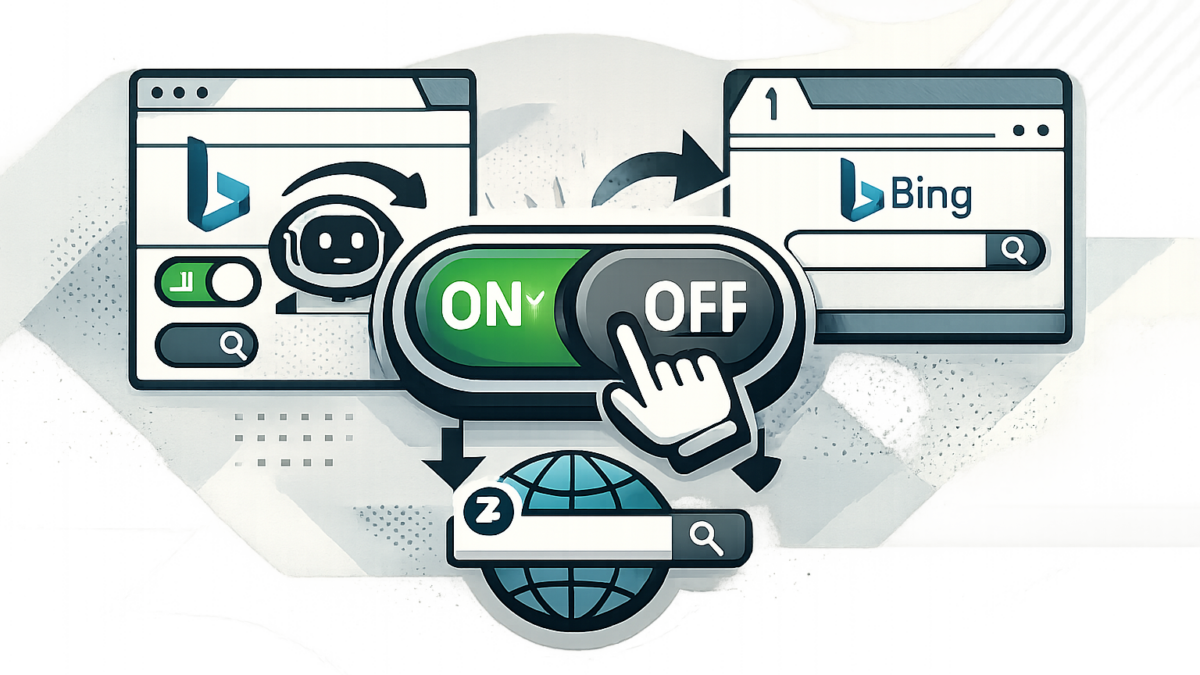
Microsoft Bing said on November 11, 2026 that people can search Bing without AI-generated answers, either through a browser extension called Microsoft Bing AI Search Choice or by adding “-ai” to a query, according to a post on the Bing Search Blog. However, the extension, which is in preview for Google Chrome and Microsoft Edge, “also sets Bing as your default search engine”, and its Chrome Web Store listing says it opens Bing on every new tab as well. The blog post does not mention the new-tab change.
When checked on November 12, the Chrome listing showed 188 users and the Edge Add-ons listing showed 919 active installs. That is 919 on Microsoft’s own browser against 188 on Chrome, though the two stores measure different things. Both listings were last updated in early June, about five months before Microsoft blogged about the extension.
The post came 12 days after another Bing Search Blog post framed around choice, this one for publishers. On October 30, Microsoft announced separate AI training and grounding preferences for publishers, which take effect on February 1, 2027. The November 11 post is aimed at searchers, and does not say how it affects the citation data Bing reports to publishers.
What did Bing announce?
Two ways to search Bing without AI answers. The unsigned post lists:
- The extension (preview): Once installed, “a simple toggle lets you choose whether to see AI-generated answers on Bing.” Microsoft said the preference “applies across all your Bing searches.”
- The -ai operator: A search operator is a short command typed into the query that changes what the search engine returns. Adding -ai to any Bing search gives “results without AI-generated answers”, the post said, with no install needed.
“Being able to turn AI answers off when you want to isn’t a step back from AI. It’s a step toward putting you in charge of how you use it,” the post said. It cited “our research” on what users want, without describing it.
The post does not say whether -ai works in Copilot, the Bing app or the Edge address bar.
What else does the extension change?
The default search engine, on both browsers. The blog post says so in the last clause of its extension paragraph. The store listings put it first. The Chrome summary line reads: “Set Bing as your default search provider and open Bing on every new tab. Control AI summaries and other features in Bing results.” The Edge listing carries the default-search line but not the new-tab part. So the blog post and the Edge listing each name one side effect, and the Chrome listing names two.
The Chrome listing, offered by Microsoft Corporation, also shows:
- Data: “The developer has disclosed that it will not collect or use your data.”
- Trader status: The developer is listed as a “Non-trader”, and the store tells users in the European Union that “consumer rights do not apply to contracts between you and this developer.”
Microsoft has not said whether someone can keep the AI toggle without also making Bing their default search engine.
Usage
About 1,100 across both stores, by our calculation, though the two stores count different things. The listings, checked on November 12, show:
- Chrome Web Store: 188 users, a 5.0 rating from one rating, version 1.0.0.3, last updated June 6, 2026, size 9.39KiB.
- Edge Add-ons: 919 active installs, a 4.2 average from four ratings, version 1.0.0.2, last updated June 4, 2026 (UTC).
That adds up to 1,107, of which Edge accounts for about 83%, again our calculation. The two stores do not count the same thing, though. Chrome reports “users” and Edge reports “active installs”, so the total is a sum of two different measures. Neither shows how many people have switched AI answers off; installing and toggling are separate steps. Microsoft has published no usage figure for -ai.
The post says “we may make changes based on your feedback”, but not when the extension was first released or when it leaves preview.
Background
Has Bing done something similar before? For publishers, yes: it has added AI reporting three times this year and announced new AI preferences on October 30. In date order:
- February 11, 2026: Bing launched AI Performance in Bing Webmaster Tools (public preview), which it said shows “how often your content is cited in generative answers” across Copilot, Bing’s AI summaries and select partners.
- May 6, 2026: A Bing Search Blog post on the index drew the line: “Traditional search asks: which pages should a user visit? Grounding asks: what information can an AI system responsibly use to construct a response?”
- June 4 and June 6, 2026: The Edge and Chrome listings for the extension were last updated.
- June 16, 2026: Bing added intents, topics, citation share and compare views to the AI Performance report.
- October 13, 2026: Bing added Topics Portfolio (beta) to AI Performance.
- October 30, 2026: Krishna Madhavan, Principal Product Manager at Microsoft Bing, announced separate AI Training and AI Grounding preferences for publishers.
- November 11, 2026: The searcher-side post on turning AI answers off.
Grounding, in Microsoft’s October 30 description, “connects generated responses to web content when an answer is created”. Its page-level grounding preference has three settings: Allow (the default), Disallow, and DisallowExtended, which keeps grounding to Microsoft-operated experiences such as Copilot and excludes services Microsoft provides to third parties. The preferences take effect on February 1, 2027. Microsoft warned that Disallow or DisallowExtended means publishers “will see reduced brand visibility in AI experiences”. In practice, from February 1, 2027, publishers choose whether Bing grounds answers on their pages; searchers can already choose whether to see those answers.
What does the post not say?
Most of what a publisher needs to size it. The post gives no usage figures; the only public counts are on the store listings.
What this means for AEO
In my view, this changes almost nothing in your Bing citation numbers today. About 1,100 users and installs are unlikely to move citation counts for most sites, though Microsoft has not said how toggled-off searches are counted. The -ai operator is the part to watch, because it needs no install, and Microsoft has given no number for it.
I also read the extension as a default-search product as much as an AI switch. The Chrome listing leads with the default and the new tab. The blog post leads with choice.
What to do: log November 11 next to your AI Performance data, the same way you would log a model update, so a dip gets checked against it before anyone blames content. And AI Performance is still one engine’s data; as I wrote when Google added AI reports to Search Console, ChatGPT and Gemini still give publishers nothing comparable.
Questions the post leaves open:
- Reporting: Are searches with -ai, or with the toggle off, excluded from AI Performance citation counts in Bing Webmaster Tools?
- Scope: Does the toggle turn off Copilot Search too, or only AI answers on the Bing results page?
- Operator: Does -ai work in Copilot, the Bing app or the Edge address bar?
- Default: Can someone use the toggle without making Bing their default search engine?
- Preview: When does the extension leave preview, and what changes when it does?
- Research: What was the “research” Microsoft cites, and how many users did it cover?
- New tab: Why does the blog post leave out the new-tab change the Chrome listing puts first?
Reference
- Microsoft Bing Search Blog, “Your choice: Turn AI answers on or off in Bing” (November 11, 2026): https://blogs.bing.com/search/2026/11/your-choice-turn-ai-answers-on-or-off-in-bing/
- Chrome Web Store, “Microsoft Bing AI Search Choice” (checked November 12, 2026): https://chromewebstore.google.com/detail/microsoft-bing-ai-search/mcaabonmnmphidjfohjkdobemneigopa
- Microsoft Edge Add-ons, “Microsoft Bing AI Search Choice” (checked November 12, 2026): https://microsoftedge.microsoft.com/addons/detail/microsoft-bing-ai-search-/pmjianmjibiamoboooofebdpagpdekao
- Microsoft Bing Search Blog, “Your content, your choice: clearer preferences for training and grounding” (October 30, 2026): https://blogs.bing.com/search/2026/10/your-content-your-choice-clearer-preferences-for-training-and-grounding/
- Microsoft Bing Search Blog, “Evolving role of the index: From ranking pages to supporting answers” (May 6, 2026): https://blogs.bing.com/search/2026/5/Evolving-role-of-the-index-From-ranking-pages-to-supporting-answers/
- Bing Webmaster Blog, “Introducing AI Performance in Bing Webmaster Tools Public Preview” (February 11, 2026): https://blogs.bing.com/webmaster/2026/2/Introducing-AI-Performance-in-Bing-Webmaster-Tools-Public-Preview/
- Microsoft Bing Search Blog, “New AI Visibility Insights in Bing Webmaster Tools: Intents, Topics, Citation Share, Compare” (June 16, 2026): https://blogs.bing.com/search/2026/6/New-AI-Visibility-Insights-in-Bing-Webmaster-Tools-Intents-Topics-Citation-Share-Compare/
- Bing Webmaster Blog, “Introducing Topics Portfolio (Beta) in AI Performance” (October 13, 2026): https://blogs.bing.com/webmaster/2026/10/introducing-topics-portfolio-beta-in-ai-performance/