Google tests an “official places” section in AI search answers and adds more links, but shares no click data

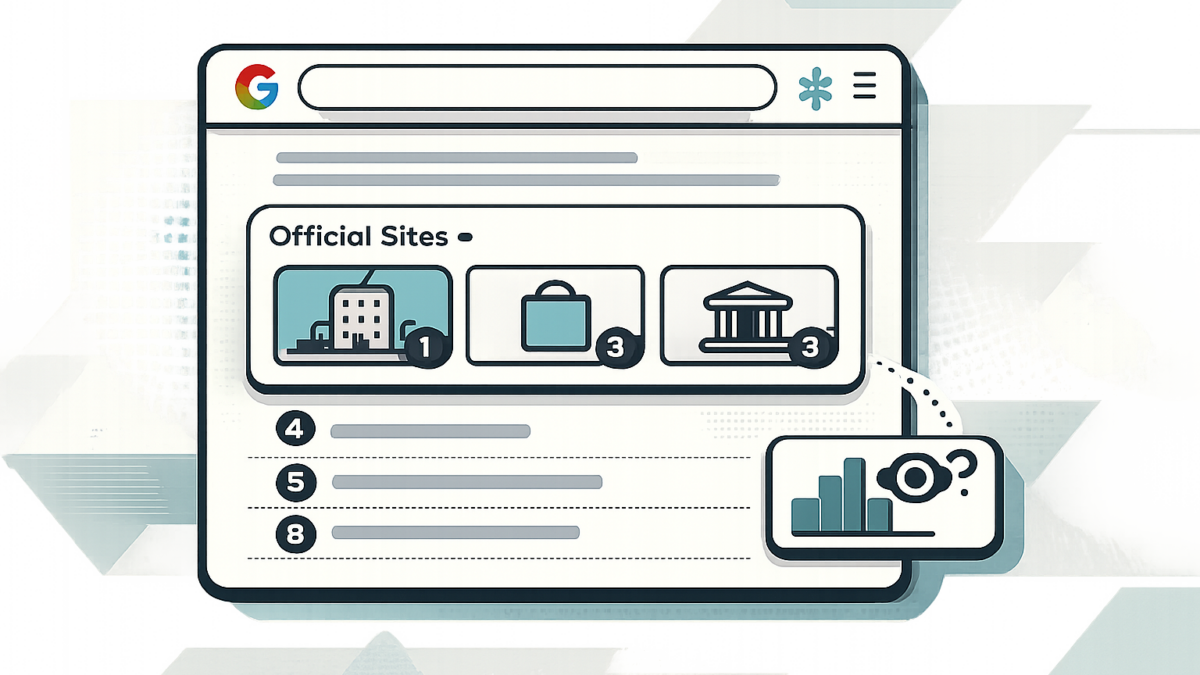
Google said on October 15 that it is changing how AI Mode and AI Overviews, its AI-generated answers in Search, link out to websites. The five updates include more inline links and a test of a dedicated section for “official places” on the web, Hema Budaraju, Vice President of Product Management, wrote in a post on The Keyword, Google’s official blog.
However, the post contains no click-through, traffic or referral figures. Its only number is that users of Google’s Preferred Sources feature have “grown by more than 7x since the start of the year”, with no starting figure. The post, published on October 15, is 24 days old; this story catches up on it because one of the two tests puts a small number of “official” links in a dedicated section at the top of an AI response.
What is Google changing?
Five things, according to the post. Google defines inline links as “links embedded in words or phrases in an AI response”. The post lists:
- More inline links: Google said it has made “continued and substantial increases” to inline links and will show them “higher up in responses more frequently”. It did not put a number on either change.
- Official places: Google will test a display that puts the “one or two official places on the web to complete a specific task” in “a dedicated section at the top of a response, with context about why each link is useful”.
- News carousels: Carousels of timely articles are starting to roll out to “additional locations and languages globally”, and will highlight a user’s Preferred Sources. The post does not name the locations or languages.
- Related articles: Links at the end of some AI responses will get image thumbnails and “a more clickable design”.
- Creator names: In the week of the post, Google began testing clickable creator and publisher names on video results in AI Mode, linking to their Search profiles.
Everything above is Google’s own account. It has published no data on how these changes affect traffic to the sites being linked.
Which of these are tests?
Two of the five. The official-places display (“We’ll be testing”) and the clickable creator names (“we started testing”) are tests. The news carousels are “starting to roll out”; the inline-link and related-article changes are described as already happening, with no markets named.
The post does not say how long either test will run, which users or countries are in it, or what result would lead Google to extend it. Google said it will “keep refining these experiences based on what works best”, without saying how it measures what works.
What counts as an “official place”?
Google has not said. The post says the test “expands on what we already do today to show links front and center when you’re looking to go to a particular site”. It gives no example task, no description of how Google judges a page to be official, and nothing on whether site owners can do anything to qualify.
Google Search Central, the company’s documentation hub for site owners, is silent too. Its changelog of documentation updates, checked on November 8, has no entry on the official-places display. Its latest entry, dated October 26, concerns user-generated spam.
What can publishers and creators act on?
Little, according to the post:
- Search profiles: The post says “Eligible creators and publishers can learn more about Search profiles and how to get started”, without saying who is eligible. On September 16, a month before the post, Search Central added documentation on putting a Search profile badge on a website, “to help site owners point their audience to their Search profile”, according to the changelog.
- Preferred Sources: Google presents the feature as one of the “tools that give them more choice” and says carousels will highlight a user’s Preferred Sources. The post says nothing about what publishers can do to be chosen. Without a base, the 7x figure says nothing about size; it could describe a small group or a large one.
What this means for AEO
In my view, the official-places test is the one brands should watch. On competitive queries, AI answers cite third parties and discount what a brand says about itself, which is why I put the brand site last among the six AEO surfaces. Task queries are the exception. Google is testing a slot at the top of the answer for the “one or two official places” to “complete a specific task”. It has not said which tasks; if renewals, payments, bookings or logins count, that slot goes to the brand’s own page. If your site is that place, make the page that completes the task say so plainly, in the initial HTML, so it does not compete with other pages on your own site that look similar. Google has not said how it picks these pages, so treat this as hygiene with no guarantee attached.
Search profiles and Preferred Sources are the parts a publisher or creator can act on today. Set up the profile if you are eligible, add the badge, and ask regular readers to pick you as a preferred source.
The post says the updates help people “dive further”, but it shows no clicks, so measure for yourself. As with Google’s AI reports in Search Console, Google’s framing is no substitute for your own numbers. Track Google traffic to your task pages and articles from October 15 onwards, keeping in mind that Google has not said when or where each change went live.
Questions the post leaves open
- Clicks: Have the extra inline links increased click-through to websites, and by how much?
- Scale: What do “continued and substantial increases” amount to, and compared with when?
- Selection: How does Google decide which pages are “official places”, and what happens when it picks the wrong one?
- Scope: Which queries, countries and share of users are in the two tests, and for how long?
- Base: How many people used Preferred Sources at the start of 2026?
- Markets: Which “additional locations and languages” are getting news carousels?
Sources
- Google, The Keyword, “More ways to connect with the web from Search” (Hema Budaraju, October 15, 2026): https://blog.google/products-and-platforms/products/search/updates-ai-mode-overviews-explore-web/
- Google Search Central, “Latest documentation updates”: https://developers.google.com/search/updates
- Sandeep Amar, “BIG ONE: Google Will Share AI Search Data in GSC, Matching Bing, But Big LLMs ChatGPT and Gemini Remain Opaque”: https://sandeepamar.in/big-one-google-will-share-ai-search-data-in-gsc-matching-bing-but-big-llms-chatgpt-and-gemini-remain-opaque/