ChatGPT searches less than you think. The fan-out data changes the AEO playbook.

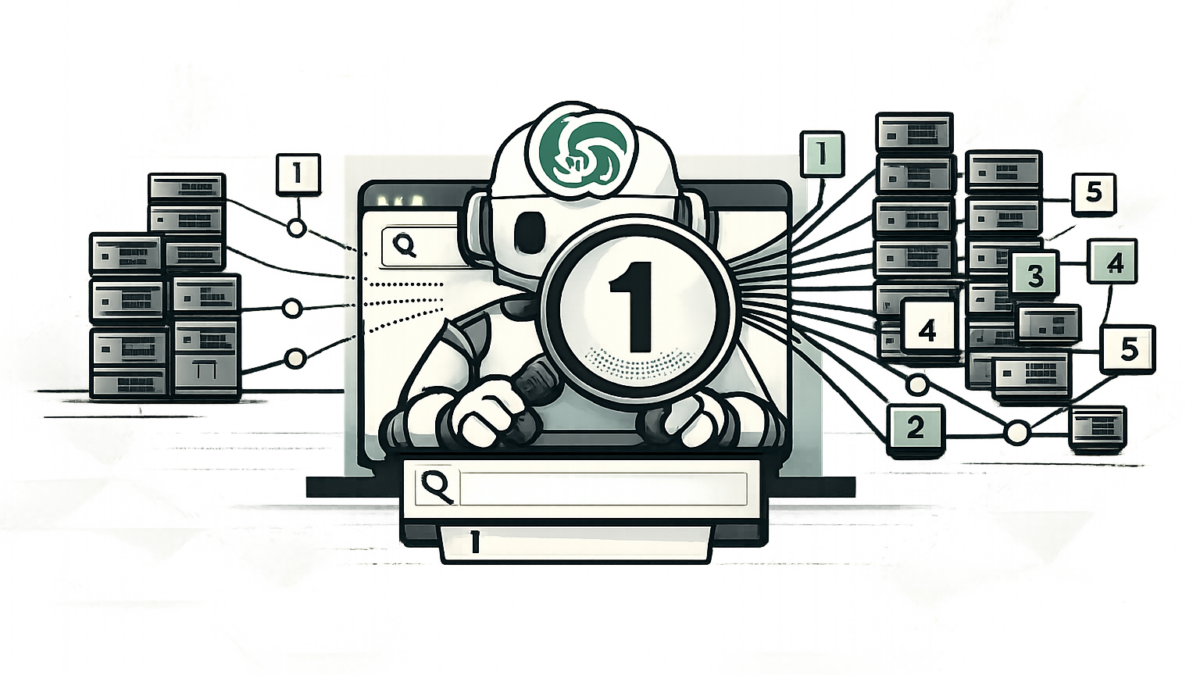
In 2026, AEO strategies were largely speculative. Most of them hinged on an assumption that no one had validated: that ChatGPT was constantly searching and fanning out across the web. One of the main strategies was to help your content rank for the maximum possible number of queries, and Ahrefs measured it. The assumption is wrong, mostly.
Ahrefs measured 66.6 million free, logged-out, GPT-5.6 Luna responses over August and September, along with the 15 million fan-out queries behind them. Two numbers stood out. Only 14.4% of responses led to ChatGPT performing a web search. And when it did search, each response led to an average of 1.6 fan-out queries. Not twelve. Not seven. Roughly, one and a half.
Source: https://ahrefs.com/blog/query-fan-out-chatgpt/
Logging out is actually more important than it appears. Over 90% of ChatGPT’s weekly users are on the free plan. The free plan is more representative of how most people use it. Logging out also clears ChatGPT’s memory and chat history, so you get to see the baseline behavior, rather than an edge case.
What 14.4% actually means
We’ll cover the big number first. Close to 6/7 of ChatGPT’s answers don’t touch the live web. They’re pull-throughs from the model’s training. For this big majority, “optimizing for retrieval” is optimizing for an event that doesn’t happen. You’re not contending for a citation spot because there’s no search and no citation panel. You’re contending for whether the model knows your brand, and that’s a slower, harder game that depends on how much the web says about you.
What about the other number? When ChatGPT does search, the funnel is narrow. There are roughly 1.6 fan-out queries, and they resolve to a handful of citations over roughly 116,000 domains in the sample. That’s not an engine blasting out 10 different reformulations of your topic.
Google already told us how this works
This is in line with Google’s statements. In the guidance for its generative AI features, Google says that these features are “rooted in our core Search ranking and quality systems.” Essentially, they’re using existing indexed web content and drawing on it via retrieval-augmented generation. Same systems, new surfaces.
https://developers.google.com/search/docs/fundamentals/ai-optimization-guide
In that same guide, Google warns against creating a separate page for every potential variation someone might ask, including fan-out queries, and lists it as a violation of its scaled content abuse policy (which is confirmed by Ahrefs data as a pointless shortcut anyway). The fan-out is extremely narrow, so a library of sub-query landing pages gets retrieved by almost nothing. You’re manufacturing pages for questions that barely get asked.
Microsoft takes the same index shift and describes it from the other end. Its engineering team explains the index evolving from ranking pages to supporting answers, where retrieval needs to be consistent and repeatable for a grounded answer as opposed to a list of links.
What actually wins a narrow funnel
A small number of fan-out queries and a few citation slots means the competition is tighter as opposed to looser. The largest controlled study we have, a 252,000-trial test across 6 models, found that a small set of gatekeepers did most of the work: topic match, recency, and position. Format tricks barely impacted the outcome.
Study: https://arxiv.org/abs/2605.25517
I have made these two observations previously. The first being how the model layer shifts. GPT can change how it searches or how frequently it searches, and it can move your citations without you changing your content. The second observation being how Google’s document is a positioning document, not the AEO Bible. The fan out numbers help support my observations. Retrieval behavior is a lever the platforms control, and the official recommendations help explain the floor.
https://sandeepamar.in/googles-ai-optimization-guide-is-not-the-aeo-bible-its-a-press-release/
Bottom line
ChatGPT is not searching for every answer. It searches on 14.4% of responses, and fans out about 1.6 times when it does. The takeaway is not to ignore fan out. The takeaway is to consider visibility, and win the game on a narrow, high-stakes funnel. Be the obvious, current and well-matched source for the query, and make sure the model is “primed” for you for the topics/queries it does not search for (85%). Optimize for visibility based on these reality checks and focus on the high stakes, needle mover. Ignore the sprawling fan-out.