ChatGPT Now Has a Real Ad Stack. AEO Just Became a Two-Front War

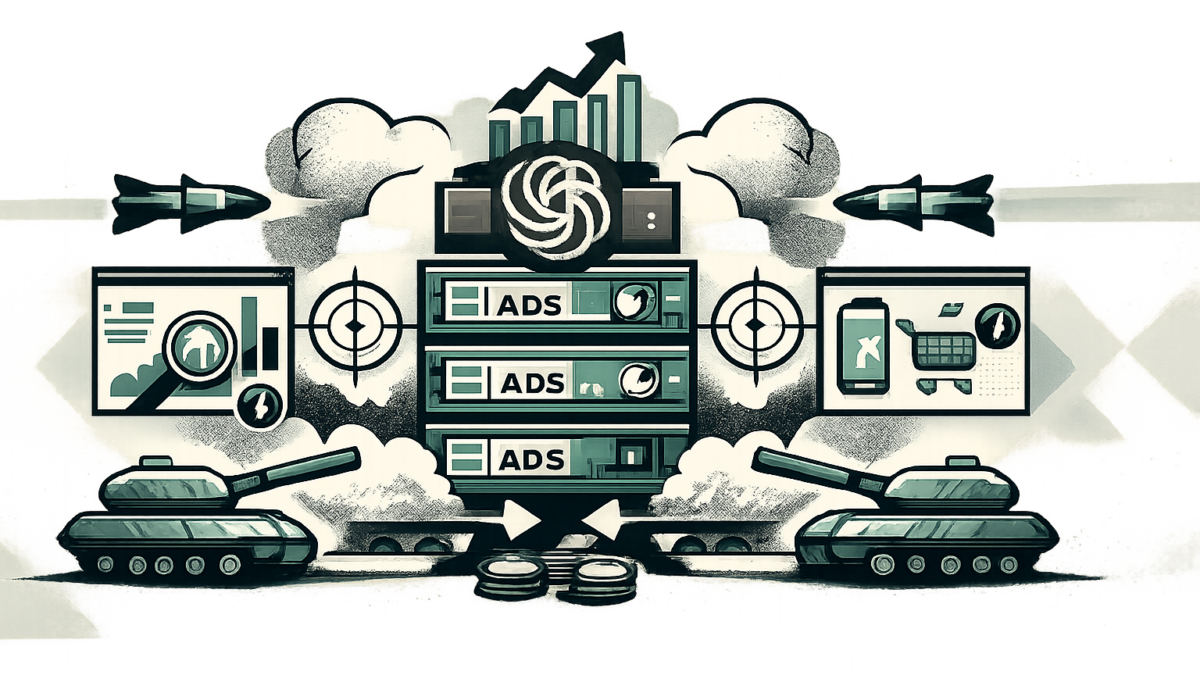
For a year the AEO conversation has obsessed over one question: how do I get cited. That question is now half the page. Over the last day OpenAI confirmed it has scaled the other half, and most of the industry is still looking the wrong way.
ChatGPT Ads is now live in 89 countries after a 26-country expansion, and OpenAI says more than 100,000 advertisers have run campaigns since it switched ads on about eight months ago. Sit with the reach number for a second: 1.2 billion people use ChatGPT every week.
Source: https://openai.com/index/chatgpt-ads-expands-26-new-countries
Ads show only on the Free and Go plans. Plus, Pro and Enterprise stay clean. So the paid layer is pointed straight at the free majority, which is most of the audience your brand is trying to reach inside ChatGPT.
What they actually built
This is not banner ads bolted onto a chatbot. OpenAI published how the stack works, and it is worth reading before you form an opinion.
The system is a custom, post-trained LLM that makes tool calls for retrieval, ranking, relevance and the auction itself. Three decisions matter.
It is stateful. The ad system remembers you across turns and across conversations. Not one query. Your whole thread.
It reads intent, not keywords. A post-trained model interprets where a conversation is heading, then selects and ranks against that.
Ad selection runs as a separate service from the answer. OpenAI says this is what keeps ads from influencing the answer itself.
Source: https://openai.com/index/building-chatgpt-ad-stack
The claim worth testing
That third point is the one to watch. “Separate service” is an architecture choice, not a law of physics. The answer and the ad now sit on the same screen, pulled from the same conversation, ranked by a model whose job is engagement. Whether the organic answer stays genuinely uninfluenced is a claim you can check, not a promise you should take on faith. Run the experiment. Ask ChatGPT the same commercial question twenty times and watch what lands next to the answer, and whether the answer starts leaning.
What this does to AEO
For two years AEO has meant one thing: earn the citation. There are now two surfaces in the same box. The cited source, which you earn. The ad, which you buy. They will compete for the same attention and, before long, for the same pixels.
If you only measure citations, you are measuring half of what your customer actually sees on the screen. Citations are still the floor. They are no longer the whole building.
And the incentives have shifted under you. OpenAI has just told every CMO that ChatGPT is a performance channel with 100,000 advertisers already in it. Budgets follow that sentence. The organic-only AEO pitch gets harder the day a client can buy the slot instead of earning it.
Bottom line
ChatGPT is becoming a place people buy, not just a place they ask. 100,000 advertisers in eight months is not an experiment, it is a channel. Plan for a page where your organic citation sits next to a competitor’s paid slot, because that page already exists in 89 countries. And treat “ads don’t influence answers” as a claim to verify, not a feature to trust.
Sources
- OpenAI, ChatGPT Ads expands to 26 new countries: https://openai.com/index/chatgpt-ads-expands-26-new-countries
OpenAI, How we built ChatGPT’s novel ad stack: https://openai.com/index/building-chatgpt-ad-stack