Microsoft says Web IQ powers ChatGPT and sells it to every Azure customer, but its benchmarks are its own and publishers can’t opt out of grounding until February

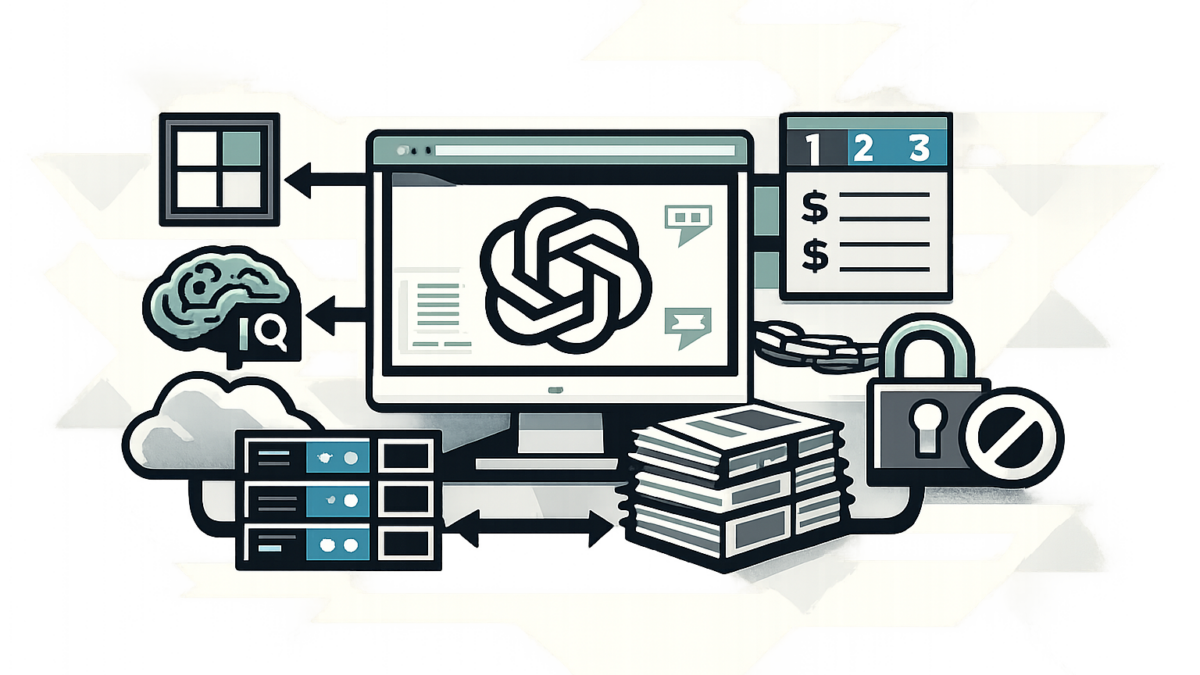
Microsoft opened Web IQ, its web grounding service for AI agents, to all Azure customers on November 17, 2026, at $1 to $9 per 1,000 calls, according to a Bing blog post by Jordi Ribas, President, Search and AI. Its product page goes further, calling Web IQ “The grounding infrastructure behind Copilot and ChatGPT.” Grounding is the step where an AI system fetches web content while it answers and builds its reply from it.
Most of the claims Microsoft makes for Web IQ come from Microsoft. The speed and quality figures are from its own tests against competitors it does not name. The freshness benchmark is one it built and open-sourced itself. And the ChatGPT claim appears only on Microsoft’s page; OpenAI’s own documents do not mention Web IQ.
Publishers, whose pages Web IQ sells access to, get one control built for AI grounding. Microsoft announced it on October 30 and will honour it from February 1, 2027, 76 days after Web IQ’s broad launch, by our calculation.
Does Web IQ really power ChatGPT?
Microsoft says it does, but OpenAI has not said so. The Web IQ page describes the product as “The grounding infrastructure behind Copilot and ChatGPT,” and the blog post’s subtitle reads “Powering frontier AI labs, trusted by enterprises.” Neither names OpenAI or says which ChatGPT features use Web IQ.
OpenAI’s crawler documentation names its own crawler, OAI-SearchBot, as the one that decides whether sites “will be shown in ChatGPT search answers.” It does not mention Bing.
How independent are Microsoft’s performance numbers?
They are not independent. Every headline figure comes from Microsoft’s own testing:
- Speed: Web IQ is “2× faster at p95 latency than the next-fastest service tested,” at 154 milliseconds, the website says. Microsoft ran the test on November 8 against a “cohort” of providers it does not name, described as “not exhaustive.”
- Quality: Microsoft’s quality and token-efficiency charts come from evaluations it ran on November 8 and 9, again against unnamed providers.
- Freshness: Web IQ “shows a strong ability to return fresh results” on FreshSearch, a benchmark Microsoft itself built. “In the absence of well-established benchmarks, we’ve open sourced a new FreshSearch index,” the post says.
- Shopping: The Commerce source “returned 57% more matched products than the next closest competitor” in 500 queries, per a footnote citing “Microsoft internal assessment, Nov. 2026.”
Microsoft does invite others to check. “Explore the methodology and replicate the benchmark yourself using our open-source code sample on GitHub,” the post says. Microsoft’s pages cite no outside group that has done so.
What do publishers get?
Publishers get three controls, and only the grounding one is aimed at AI alone, according to the post:
- Crawling: “Bingbot does not crawl sites that publishers disallow, so that content is not in the index Web IQ draws on.”
- Indexing: NoIndex “prevents pages from appearing in our Search index.”
- Grounding: The page-level AI preference announced on October 30, which Bing honours from February 1, 2027.
The first two also remove a page from Bing search. So until February, a publisher that wants out of Web IQ has to leave Bing too. Microsoft warned on October 30 that blocking grounding would mean “reduced brand visibility in AI experiences,” and that “Neither choice guarantees inclusion, traffic, or payment.”
Neither the post nor the product page mentions paying publishers whose pages Web IQ returns. Customers can bring their own content licences, with licensed and web results coming back “ranked together in one response,” the website says. That deal is between the customer and the licensor. The open web is priced at $7 per 1,000 calls.
Who decides what counts as a credible health source?
Microsoft does. Web IQ “automatically identifies healthcare-related questions and prioritizes more clinically relevant and credible sources,” the post says, with source credibility “informed by principles independently published by the National Academy of Medicine.” The product page says it “ranks credible health sources above forums and blogs.”
Microsoft has not published which sources it treats as credible, or how a site can tell whether it has been ranked down. “Informed by” leaves room between the Academy’s principles and Microsoft’s ranking.
Does Web IQ keep customers’ queries?
Microsoft says it can avoid keeping them, but only for some customers. “Zero Query Logging is available to Azure managed customers in regulated industries,” the post says, so that “their queries are not retained.” It does not say how long queries from other Web IQ customers are kept, or what they are used for.
How much does it cost, and is it cheaper?
Web IQ costs $1 to $9 per 1,000 calls, according to the website’s FAQ:
- Browse: $1 per 1,000 calls.
- Web, News, Images, Videos and Places: $7 per 1,000 calls.
- Auto, the new default: $8 per 1,000 calls.
- Auto Advanced: $9 per 1,000 calls.
- Commerce: Select customers only, in private preview.
Microsoft calls this “new, lower pricing.” Neither page says what Web IQ cost before, so the cut cannot be checked.
What else is new?
The November update adds four capabilities, per the post. Auto handles “multi-step retrieval in one call.” Auto Advanced can “refine the query, and retrieve additional information” when a first answer falls short. Places holds data on “more than 207 million businesses and places.” Commerce, in private preview, holds “more than 40 billion structured offers.” Microsoft has not said how merchants get into, or out of, the Commerce source.
Genspark, Publicis Groupe and National Grid are named as customers. Genspark said Web IQ cut its voice assistant’s response time “from 6 seconds to 0.6 seconds.”
Background
- June 2, 2026: Microsoft launched Web IQ, calling it “a search engine for AI systems.”
- October 30, 2026: Microsoft announced separate AI training and AI grounding preferences for publishers.
- November 8 and 9, 2026: Microsoft ran the speed and quality tests it cites.
- November 17, 2026: Web IQ became available to all Azure customers, announced at Microsoft Ignite.
- February 1, 2027: Bing begins honouring the grounding preference.
What this means for AEO
In my view, the claim on Microsoft’s product page matters more than anything in the post. If Web IQ is “behind Copilot and ChatGPT,” then Bing indexing decides whether you are in the pool that thousands of new agents draw from. Check Bing Webmaster Tools before anything else.
The health mode cuts against a surface that works elsewhere. In The AEO Process, Reddit and forums rank third among the sources that put a brand into answers. On Web IQ health queries, Microsoft now ranks them below “credible” sources it has not listed.
And for publishers, the trade has not changed. Stay in and Microsoft sells your pages to agent builders at $7 per 1,000 calls, with no payment mentioned. Opt out before February and you leave Bing search too.
Questions Microsoft’s posts leave open:
- ChatGPT: Which ChatGPT features use Web IQ, and will OpenAI confirm it?
- Benchmarks: Which providers did Microsoft test against, and will an outside group verify the results?
- Publishers: Will Microsoft share Web IQ revenue with publishers whose pages it returns?
- Health: Which sources count as “credible,” and can a site appeal?
- Pricing: What did Web IQ cost before November 17?
- Queries: How long are non-regulated customers’ queries kept, and for what?
Reference
- Microsoft Bing Blog, “Web IQ is now broadly available: Build better agents that keep up with the world” (November 17, 2026): https://blogs.bing.com/webiq/2026/11/web-iq-is-now-broadly-available-build-better-agents-that-keep-up-with-the-world/
- Microsoft, Web IQ product page and FAQ (checked November 19, 2026): https://www.microsoft.com/en-us/webiq
- Microsoft Bing Blog, “Announcing Microsoft Web IQ” (June 2, 2026): https://blogs.bing.com/webiq/2026/6/announcing-microsoft-web-iq/
- Microsoft Bing Blog, “Your content, your choice: clearer preferences for training and grounding” (October 30, 2026): https://blogs.bing.com/search/2026/10/your-content-your-choice-clearer-preferences-for-training-and-grounding/
- OpenAI, “Overview of OpenAI Crawlers”: https://platform.openai.com/docs/bots
- Sandeep Amar, “Google’s AI Optimization Guide Is Not the AEO Bible. It’s a Press Release!”: https://sandeepamar.in/googles-ai-optimization-guide-is-not-the-aeo-bible-its-a-press-release/