ChatGPT Enterprise is now sold on AWS Marketplace, but OpenAI’s listing does not guarantee customer data stays on AWS

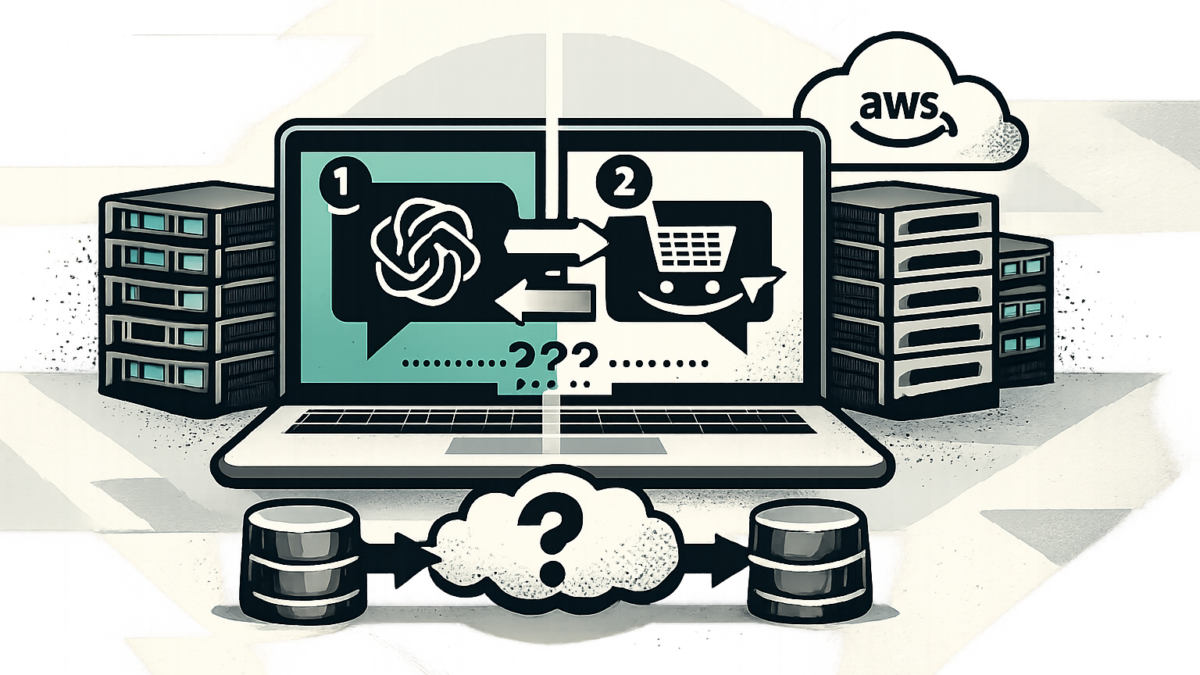
OpenAI said on November 9 that ChatGPT Enterprise, the workplace version of its chatbot, can now be bought through AWS Marketplace, letting companies pay through their existing Amazon Web Services (AWS) billing and apply eligible spend toward their AWS commitments, according to a blog post. However, the Marketplace listing, where OpenAI is named as the seller, says buying through AWS “does not guarantee that all customer data remains on AWS infrastructure or within your AWS environment”, even though the same page marks the product “Deployed on AWS: Yes”.
OpenAI is the data processor, the listing says. Pricing is by custom quote only, and neither document says how many companies or seats use ChatGPT Enterprise. Until now, the OpenAI and AWS partnership served developers. This step covers the seats employees use.
What changes for buyers?
Mainly the purchase route. According to the post and the listing:
- Billing: Purchasing and billing are handled through AWS Marketplace.
- Commitments: The listing says eligible consumption counts toward a customer’s AWS spending commitments (which the listing calls EDP or PPA), “subject to your agreement”. Neither the post nor the listing defines what counts as “eligible spend”, though the listing’s opening summary says, without that condition, that “spend counts toward your AWS EDP or PPA commitment”.
- Product: AWS customers get “the same models, features, and functionality available directly from OpenAI, with new features released at the same time”, the post says.
- Other editions: Eligible customers can also buy ChatGPT for Healthcare and ChatGPT for Financial Services there.
- Pricing: “Custom pricing options” only. Buyers request a private offer, a custom quote based on their requirements and eligibility.
Customers can “govern it alongside the rest of their software spend, and move from evaluation to rollout faster”, Matt Yanchyshyn, Vice President of AWS Marketplace and Partner Services, said in the post.
The same marketplace also lists rival enterprise chatbots. The listing’s “Similar products” section shows Claude Enterprise by Anthropic, the AI company that makes Claude, whose entry also says spend draws down from EDP or PPA commitments, and Perplexity Enterprise Pro. When checked on November 10, the ChatGPT Enterprise listing had “0 ratings”.
The post names no seat minimum and no list of eligible countries. Buyers are told to contact their OpenAI or AWS account team to confirm eligibility.
Does customer data stay on AWS?
Not necessarily. OpenAI “is the data processor for ChatGPT Enterprise and engages subprocessors, including AWS, to support the service”, the listing says. In practice, AWS sends the invoice, while OpenAI handles the data and uses AWS as one of its suppliers.
The listing describes two controls. Data residency sets where supported customer content is stored. Inference residency sets where the model runs on that content. Both apply only when enabled, are not available in all regions, and do not cover all processing or systems data. Business data is encrypted and not used to train OpenAI’s models by default, the listing adds.
It does not say which customer data may be processed outside AWS infrastructure, or which regions offer residency, and it does not explain how that fits with the same page’s “Deployed on AWS: Yes”.
Usage: how many people, and for what?
OpenAI has not said how many people use ChatGPT Enterprise. Its post says more than 1.2 billion people use ChatGPT each week, a figure for ChatGPT overall, not the Enterprise product. In its April 28 post, OpenAI said more than 4 million people were using Codex, its coding agent, every week. The November 9 post gives no newer figure.
The listing says ChatGPT Enterprise bundles four products:
- Chat: Conversations to ask questions, write and work through problems.
- ChatGPT Work: Employees can “delegate research, analysis, and projects that span multiple steps”, using context from connected apps and files to produce documents, presentations, spreadsheets and reports.
- Codex: OpenAI’s coding agent for building software.
- Dots: “Always on” agents that learn a user’s preferences, track updates and keep documents and analyses current between conversations.
Neither document discloses seat counts, customer counts or revenue for ChatGPT Enterprise. The usage figures above are OpenAI’s own and have not been independently verified.
Background: how the OpenAI and AWS partnership got here
The listing follows two earlier OpenAI announcements on AWS this year:
- April 28, 2026: OpenAI models (including GPT-5.5) on Amazon Bedrock, Codex on AWS and Amazon Bedrock Managed Agents powered by OpenAI launched in limited preview. Bedrock is the AWS service where developers build AI applications and agents.
- August 11, 2026: OpenAI made its Daybreak models available through Amazon Bedrock. In that post, OpenAI said its frontier models and Codex “became generally available on AWS” earlier in the year, without giving a date.
- November 9, 2026: ChatGPT Enterprise, the end-user product, became available on AWS Marketplace.
OpenAI said the two routes complement each other: developers build in Bedrock, while teams across a business use ChatGPT Enterprise.
What this means for AEO
In my view, ChatGPT Work and dots matter more to marketers than the billing change. ChatGPT Work takes a research task across several steps, and dots keep tracking a topic between conversations. If a procurement team asks ChatGPT Work to shortlist vendors, that research runs inside ChatGPT, and the employee may only see the finished document.
B2B brands should treat enterprise ChatGPT as a buyer-research surface of its own, the way each new ChatGPT vertical becomes its own AEO surface. That research also draws on connected apps and files, so your public content competes with internal documents you will never see. The order of surfaces does not change: comparison content and third-party “best of” lists first, your own website as the floor.
None of this can be measured yet. OpenAI shares no visibility data for ChatGPT, and neither the post nor the listing suggests enterprise workspaces will be any different.
Questions the post and listing leave open:
- Data location: Which customer data is processed outside AWS infrastructure, and where?
- Residency: Which regions support data and inference residency for Marketplace buyers?
- Eligibility: Which countries qualify, and is there a seat minimum?
- Spend: What counts as “eligible spend” toward AWS commitments?
- Pricing: Does buying through AWS cost more or less than buying directly from OpenAI?
- Adoption: How many organisations and seats use ChatGPT Enterprise today?
Reference
- OpenAI, “ChatGPT Enterprise now available in AWS Marketplace” (November 9, 2026): https://openai.com/index/chatgpt-enterprise-aws-marketplace/
- AWS Marketplace, “ChatGPT Enterprise” listing, sold by OpenAI: https://aws.amazon.com/marketplace/pp/prodview-sscra4m7iracg
- OpenAI, “OpenAI models, Codex, and Managed Agents come to AWS” (April 28, 2026): https://openai.com/index/openai-on-aws/
OpenAI, “Daybreak models are now available on AWS” (August 11, 2026): https://openai.com/index/daybreak-models-are-now-available-on-aws/